Tuesday, December 3, 2013

LITTLE WHITE DUCK: A CHILDHOOD IN CHINA


By Na Liu
Illustrated by Andres Vera Martinez
Published by Graphic Universe
Copyright © 2012

Review by Anthony Kendrick


What was your childhood like? How does your childhood compare to your parents or you’re your grandparents childhood? Have you ever asked them about their life?

Na Liu was born in Communist China in the 1970’s at the end of the Cultural Revolution. This was a time of great turmoil but also great change, the China of that time was very insular, but it would slowly open up to the rest of the world. Na tells 8 stories from her childhood to share with others what it was like for a child in China then, and how it compares to her parents and grandparents childhoods.

This book was, and was not, what I expected. I expected to see a dilapidated conformist environment, and this I did. That being the case I expected Na to tell me how horrible it was there and to rail against the Chinese government, but she didn’t. With the help of her husband and illustrator, Andres, she describes not just the pains but the joys of childhood in China. She actually points out how much better her childhood was as compared to previous generations and as compared to children in other parts of her country.

At the end of the book Na and Andre also provide some helpful components: a Chinese words glossary, a timeline of significant dates in Chinese History, Na Liu’s brief biography, translations of some Chinese characters, and the map of China and Hubei Province.

I found this book to be enlightening, enjoyable, and educational. It should appeal to 5th -8th graders or any reader interested in Chinese history and mythology.

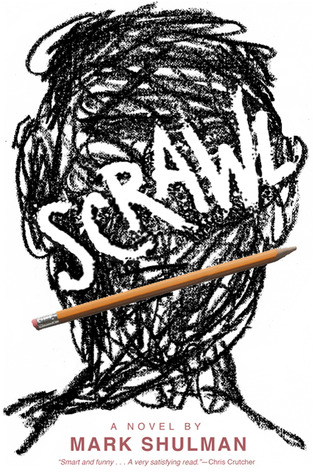
SCRAWL


By Mark Shulman
Published by Roaring Book Press
Copyright © 2010

Review By Anthony Kendrick


Is there any way to reach a bully? Well I guess that depends why the bully is a bully.

Tod Munn is a bully. He’s the kid that intimidates you until you give up your lunch money. Unfortunately somebody else is horning in on his territory, so by the time Munn gets to his usual prey their pockets are empty. This isn’t sitting well with Tod and his “droogs”, so they are going to have to do something drastic. This time they get caught, but instead of expulsion the school counselor has a different plan. She sentences Tod to a month of detention with her, where he is to write in a journal every day. Tod might actually prefer to be with his friends who get assigned to outside clean up duty, at least then he could keep tabs on their mutinous ways.

The reader gets to view this story through the pages of Tod Munn’s detention journal. We slowly learn what landed Tod in detention and what his motivations are for bullying others. What we learn is that Tod is very smart, and even talented, but he is from the wrong side of the tracks trying to survive poverty and a bad family life. What we eventually learn is that some kids bully to survive, and some bully because their just mean. While neither path should be condoned the reader will come away with some empathy for Todd, because in addition to his other problems he is also being bullied just not in the straight up, physical, intimidating way that he bullies.

I love books that make me question my perception. Like most other people, I had been bullied a little bit when I was in school, and so I hate bullies. I root against them; I want them to get what they deserve. The assumption is that bullies do what they do because they are mean and horrible people.

 Mark Shulman tells us a story from the bully’s perspective though, and he helps us to see that it is completely conceivable that some kids bully as a survival mechanism. Again, it doesn’t make it right, but this story actually made me feel for the bully protagonist. So, now instead of saying – I hate bullies, I’m more likely to say – I hate bullying.

“Scrawl” is one of those stories that you know is good because you get so invested in the character that you want to know what he goes on to do when there are no more words for you to read. Tod is a character that many teens will be able to relate to whether they are a bully or a victim of a bully, and I can see this book as a great conversation starter.

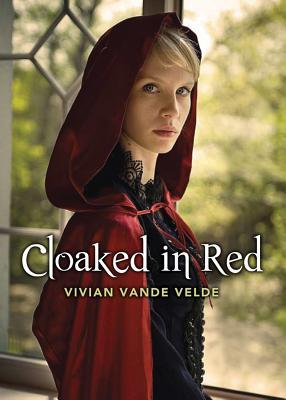
CLOAKED IN RED


By Vivian Vande Velde
Published by Marshall Cavendish
Copyright © 2010

Reviewed by Anthony Kendrick


Everyone is familiar with the story of Little Red Riding Hood. LRRH is traveling through the woods on her way to her Granny’s house to bring her a basket of food. When she gets there a wolf has dressed up like her Granny – “What big eyes, ears, and teeth you have”… “The better to eat you with!” “Ahhhh!” and then the woodsman comes around and saves LRRH (and sometimes Granny) from the wolf.

A child doesn’t really think much about this story, but as a young adult/adult you may begin to ask logical questions about this story (if you have a lot of time on your hands) like: why does she wear a red cloak? What is her real name? Why did her mother send her unattended through a dangerous wooded area? Why is she sending her to her sick grandmother so she can get sick too?

Vivian Vande Velde has obviously thought about this story a lot, and she provides us with 8 short stories in answer to her own questions. Some of these stories are exciting, some whimsical, some magical, and some humorous. And while I found some stories more enjoyable than others, they were all indeed very imaginative stories sure to keep your attention and make you wonder about other fairy tales.

BOOK TRAILER - THE LYNCHING OF LOUIE SAM


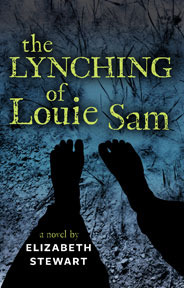
THE LYNCHING OF LOUIE SAM


By Elizabeth Stewart
Published by Annick Press
Copyright © 2012

Review by Anthony Kendrick


We all like to think that we are good people, that given the choice of standing up for someone very different from us who is in desperate need or joining in with our peers who are injuring them, that we would do the right thing. But throughout history there were a litany of people who just stood by and let bad things happen. “The Lynching of Louie Sam” is likely the story of just such an event.

It’s 1884 in the Washington territory and the settlers in more remote parts of the territory stick close together for their safety and livelihood. While life is relatively peaceful, there is still tension with the Native peoples. George Gillies and his family live in what is now Whatcom County, Washington; just miles away from the international border with Canada. One Sunday on their way to church, George and his three siblings come across the burning house of their neighbor James Bell and they find that he has been murdered. All fingers point to a native boy, Louie Sam, who had been seen in the area that day. A lynch mob is formed to get Louie Sam; George and his friend Pete are eager to follow the mob into Canada to impress their fathers and their friends. Soon however, George and his father begin to have doubts about Louie Sam’s guilt. Will they keep quiet to protect their own, or will they do what is right?

“The Lynching of Louie Sam” is a historical novel that is based on an actual event. While the characters in the book were real people, any of their thoughts and actions, beyond the event in question, are merely great story telling. Elizabeth Stewart has written a gripping story about racism, injustice, and conscience. It even loosely touches on the issue of bullying. I think that Stewart explores the questions involved in these issues well: Is it more important to do what is right and see justice served, or to protect your own no matter what? And do you do what’s right to ease your conscience, or do you do what’s right because it’s right?

Stewart fleshes out a very complex cast of characters, especially in George Gillies. George is fifteen; he is trying to prove to his father and his friends that he is a man. This task is difficult because his best friend, Pete, constantly reminds him that he is a year older and treats him as such. In addition he has a very impetuous younger brother who seems to struggle less with his sense of right and wrong. Part of George’s problem is that he isn’t brash like many of the men and boys he knows, but he is thoughtful. In his one instance of definitive action and brashness the situation goes awry. So what does it mean to be a man?

There is just so much to enjoy about this book. The story is sad but riveting, the characters are complex, it touches home here in the Pacific Northwest, and the story’s moral is universal when considered alongside so many tragic events from history and modern times. I highly recommend this book for adults and youth in 7th grade and up.

POTATOES ON ROOFTOPS: FARMING IN THE CITY


By Hadley Dyer
Published by Annick Press
Copyright © 2012
Review by Anthony Kendrick


“More than a billion people survive on $1.25 per day or less,” thus hunger is still a big problem throughout the world. Even in the United States hunger is still a problem for millions of people. Many poor people throughout the world move to the city to make a better living, but what they find is that comparably they are still not making enough money and now they are farther from the good food sources of the countryside. Cities can be fun and exciting places to be, but they can be devoid of fresh, nutritious, and affordable food for many of us. That doesn’t have to be the case though.

“Potatoes on Rooftops” shows us how people of all ages around the world are using urban spaces to successfully grow great food from fruits and vegetables to chickens and fish. They are doing this on rooftops, window sills, empty city lots, and backyards. Urban farming not only helps feed people (often those in need), but also gives its participants a sense of pride and accomplishment.

This book is not a gardening/livestock instructional guide. It is a book of great ideas on how to make urban spaces greener and more useful. While the focus is mostly on the inner city, the ideas transfer well to small towns and the countryside where there are still many people who don’t own a lot of land, because among the important things it demonstrates is how to use limited space effectively. What I like most about this book, of course, is that it is directed at a younger reader. You are never too young to grow your own food as the text and illustrations in this book depict. You can make a difference in your family’s, and even your community’s, food supply and health.

I highly recommend “Potatoes on Rooftops” for middle school students and teachers. There is a lot to learn from reading and applying this book about environmental science, math, and even social studies.