A Tale of Two Castles
by Gail Carson Levine
Published by Harper
Copyright © 2011
Review by Anthony Kendrick
Move over Sherlock Holmes and Professor Watson; here comes Meenore and
Elodie. “A Tale of Two Castles” beautifully marries two genres, fantasy
and mystery, into a riveting tale of prejudice, theft, deception, and
attempted murder.
Elodie is leaving her island home of Lahnt in
Lepai for it’s mainland capital city of Two Castles. She is twelve years
old and her parents are sending her away to find an apprenticeship with
a weaver. However, Elodie has other plans; she wants to join a
theatrical troupe and become an actress.
During her sea voyage
she learns that it is no longer free to become an apprentice. It will
cost her much more than what she has. Her task seems bound to fail, and
yet she does not have the money to turn around and go home. Fortunately
for her she is taken in by the dragon Meenore to be his assistant.
Meenore is a jack-of-all-trades. He will lend you his fire, his wings,
or his powers of induction and deduction as long as you are willing to
pay his price.
Elodie will now assist him in his business, and
one of her first tasks is to proclaim Meenore’s inimitable ability to
find what is lost and to reveal that which is not known. This job will
eventually lead to a mission into the Ogre’s castle where Elodie must
uncover a plot to murder his lordship. Elodie will find that evil does
not always wear fangs, claws, or blood red eyes. Yes, just as her mother
told her she must “beware the white sepulcher.”
“A Tale of Two
Castles” is unlike any fantasy that I’ve read. It is not overloaded with
magic and action. There are no magic spells and there are no fights to
the death. There is simply a dragon, an ogre, a king, a princess, a
smart and determined young girl, and a cast of townsfolk and servants.
However, no one is what they seem and little happens with striking
observableness. Meenore and Elodie must use their intellect to make
logical deductions, inductions, and inferences to get to the bottom of
this case.
Levine writes a tale that shows that you cannot judge
goodness or evil by mere appearance and outward kindness. In addition,
you never know where, or in what form, you are going to find a friend.
And lastly, if you are an ogre never get trapped in a room full of cats.
This
book is a wonderful gateway for youths not only into the world of
fantasy, but also into the world of logic and intellect. Youths need to
read about characters who are mentally superior, not just physically
superior, and Meenore and Elodie fit that bill well.
Showing posts with label Fantasy. Show all posts
Tuesday, February 11, 2014
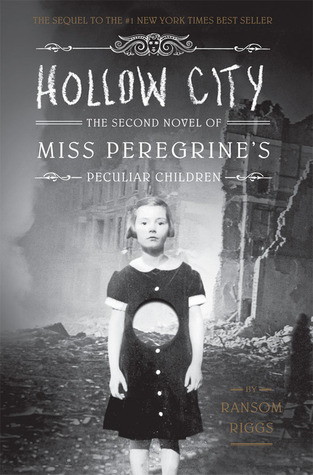
HOLLOW CITY
Hollow City:
The Second
Novel of Miss Peregrines Peculiar Children
By Ransom
Riggs
Published by
Quirk Books
Copyright ©
2014
Review by Anthony Kendrick
In the “Miss
Peregrine” series the side show freaks are the main attraction and I wouldn’t
have it any other way. This second book gives us even more peculiars, even more
action, and even more suspense. This sequel definitely lives up to, and even
surpasses the original!
The
adventures of Miss Peregrine and her peculiar children continue in Hollow City.
Miss Peregrine has been saved from the Wights but she is stuck in bird form, and
only another ymbryne can cure her. So, her wards will embark on a journey to
find help in war torn London of 1940. Finding one uncaptured ymbryne is hard
enough, but with bombs dropping everywhere, Wights disguised as allied
soldiers, and Hollowghast seeking to eat them alive it becomes a nearly
impossible task. With the help of a menagerie of peculiar animals, some
gypsies, and some stray peculiars they will find the only free ymbryne in
London, but will they find her quick enough to save Miss Peregrine?
Ransom Riggs
surprised me with his initial offering “Miss Peregrine’s Home for Peculiar
Children” which seemed like an old fashioned X-Men. The story, however, was
heavily focused on Jacob Portman the boy from the future who finds the Cairnholm
Loop and can see the Hollowghast. Jacob is still the main protagonist and the
development of his abilities play a key role in the safety of him and his friends,
but Riggs real victory here is that he develops the other peculiar children
more fully in “Hollow City”. He also delivers on the X-Men feel with more
action as Miss Peregrine’s peculiars show how useful their powers can really be
in a fight; I mean who really thought that a boy who has bees living in him
would find a way to be useful. (And why in the world do bees live in him
anyway!? Riggs gives us a very succinct answer.) Additionally, he adds to his
cast of peculiars by introducing child and adult peculiars from other loops and
times whose abilities are just as odd and powerful.
If I had any
qualms with the story it was that the relationship between Jacob and Emma got a
little boring at times, but I understand its utility within the story. That
said, “Hollow City” is the perfect sequel. I loved it just as much or more than
the first book. One fantastic thing is that the author has left us hanging once
again, so we know there will be a third in the series. I don’t want to give too
much away, but just when everything seems to be going right it doesn’t. And
just when heartbreaking decisions are made, they are turned upside down. I am
now eagerly awaiting the third installment even more anxiously than I did the
second. Fans of Fantasy, and comic book fans (this is not a comic book), should
read this story. Riggs really shows how good Juvenile and Young Adult novels
can be.
Monday, February 3, 2014
THE FOUNDLING AND OTHER TALES OF PRYDAIN
The Foundling and Other Tales of Prydain
by Lloyd Alexander
Published by Henry Holt and Company
Copyright © 1999
Review by Anthony Kendrick
"The Foundling and Other Tales of Prydain" is a book of 8 short stories in which Lloyd Alexander get's to revisit the Characters from the Prydain Chronicles and tell a little of their back story. On it's own this book might not be very enjoyable, but once you have taken the journey through Prydain these stories make perfect sense and add joyfully to your memory of that place.
In "The Foundling" we meet the Great Dallben as a child, and we learn how he came to possess the book of three.
In "The Stone" we poor Doli is yet desperately trying to turn himself invisible, to no avail, and he is seen and helped by a poor farmer. The farmer thus asks for and is granted a wish, but he shall wish that he had not made that wish afterall.
In "The True Enchanter" Princess Angharad, Eilonwy's mother, must choose a suitable husband. Since she is royal and an enchanter she may only choose an enchanter to marry, but will she be able to find one who is not only an enchanter but is also enchanting?
In "The Rascal Crow" a clever, but conceited, crow named Kadwyr will be humbled. He will learn that we all need help sometimes, and that help might come from the most unlikely of places, so he should watch his tongue.
In "The Sword" we see the story of King Ritta who was a good and just king; however, he let his pride get the best of him and he slowly sunk to become an evil and paranoid king who lost the love and respect of his kingdom. And of course we learn why Princess Eilonwy found the great sword Dyrnwyn where she did under the spiral castle.
In "The Smith, the Weaver, & the Harper" we see how Arawn, Lord of Death, was able to steal the secrets of craftsmen, but there was one that he could not steal.
In "Coll and his White Pig" tells how the warrior turned farmer, Coll, saved his pig with the help of the creatures of the forest because of his goodness and courage. But most importantly we learn what happens to his turnips.
In "The Truthful Harp" we meet King Fflewddur Fflam in his small kingdom when he decides to become a bard. We get to be with him when he learns the power of the Harp that has been bestowed upon him, and just how valuable and precious the truth can be.
There isn't much to tell about this book that hasn't already been said in my review of "The Chronicles of Prydain". I will reiterate though:
"Lloyd Alexander is among the best fantasy writers of all time, but he has been forgotten by the book reading public for some time now. Students today have never heard of him. Most readers of my age have not heard of him. I really want to change that. I highly recommend his quintessential works 'The Chronicles of Prydain.'"
If you have read "The Chronicles of Prydain" you will want to read "The Foundling" as it will entertain you will earlier stories of Prydain.
by Lloyd Alexander
Published by Henry Holt and Company
Copyright © 1999
Review by Anthony Kendrick
"The Foundling and Other Tales of Prydain" is a book of 8 short stories in which Lloyd Alexander get's to revisit the Characters from the Prydain Chronicles and tell a little of their back story. On it's own this book might not be very enjoyable, but once you have taken the journey through Prydain these stories make perfect sense and add joyfully to your memory of that place.
In "The Foundling" we meet the Great Dallben as a child, and we learn how he came to possess the book of three.
In "The Stone" we poor Doli is yet desperately trying to turn himself invisible, to no avail, and he is seen and helped by a poor farmer. The farmer thus asks for and is granted a wish, but he shall wish that he had not made that wish afterall.
In "The True Enchanter" Princess Angharad, Eilonwy's mother, must choose a suitable husband. Since she is royal and an enchanter she may only choose an enchanter to marry, but will she be able to find one who is not only an enchanter but is also enchanting?
In "The Rascal Crow" a clever, but conceited, crow named Kadwyr will be humbled. He will learn that we all need help sometimes, and that help might come from the most unlikely of places, so he should watch his tongue.
In "The Sword" we see the story of King Ritta who was a good and just king; however, he let his pride get the best of him and he slowly sunk to become an evil and paranoid king who lost the love and respect of his kingdom. And of course we learn why Princess Eilonwy found the great sword Dyrnwyn where she did under the spiral castle.
In "The Smith, the Weaver, & the Harper" we see how Arawn, Lord of Death, was able to steal the secrets of craftsmen, but there was one that he could not steal.
In "Coll and his White Pig" tells how the warrior turned farmer, Coll, saved his pig with the help of the creatures of the forest because of his goodness and courage. But most importantly we learn what happens to his turnips.
In "The Truthful Harp" we meet King Fflewddur Fflam in his small kingdom when he decides to become a bard. We get to be with him when he learns the power of the Harp that has been bestowed upon him, and just how valuable and precious the truth can be.
There isn't much to tell about this book that hasn't already been said in my review of "The Chronicles of Prydain". I will reiterate though:
"Lloyd Alexander is among the best fantasy writers of all time, but he has been forgotten by the book reading public for some time now. Students today have never heard of him. Most readers of my age have not heard of him. I really want to change that. I highly recommend his quintessential works 'The Chronicles of Prydain.'"
If you have read "The Chronicles of Prydain" you will want to read "The Foundling" as it will entertain you will earlier stories of Prydain.
Wednesday, January 8, 2014
The Chronicles of Prydain
The Chronicles of Prydain Series
By Lloyd Alexander
Published by Henry Holt and Company
Copyright © 1964 – 1968
Review by Anthony Kendrick
The Chronicles of Prydain is an epic
fantasy series by the late and great fantasy author Lloyd Alexander. To really
appreciate his work you must read this series. Think the lord of the rings but
on a feudal level, and written for children.
The series contains these stories:
The Book of Three – In which Taran an assistant pig keeper sets off to find a runaway pig
that tells the future and ends up on a quest to save Prydain from the forces of
evil. He is joined by Princess Eilonwy who possess a strong will and mostly latent
magic, Fflewddur Fflam who splits his time as a king and a bard who is known to
stretch the truth a little, Gurgi Taran’s faithful page though I’m not quite
sure what he is, and Doli a stout hearted but curmudgeonly dwarf.
The Black Cauldron – In which Taran having showed is mettle has been selected by Prince
Gwydion to accompany a band of warriors who will travel to Annuvin to seek out
and destroy the Black Cauldron from which the evil Arawns undead cauldron born
warriors are created. In his close company is the noble bard Adaon and the glory hound Prince Ellidyr who has a
chip on his shoulder. However, finding the cauldron and destroying it will be
two separate tasks altogether.
The Castle of Llyr – In which Taran will accompany Eilonwy to the Isle of Mona where she
will learn to be a proper princess. However, Taran will soon find out that
there are others waiting for them there that wish to awaken Eilonwy’s magic for
their own evil ends. When Eilonwy is kidnapped it is up to Prince Gwydion, Taran,
Fflewdur Fflam, Rhun the noble yet bumbling Prince of Mona to find her.
Taran the Wanderer – In which Taran sets out on quest by himself to find out who he truly is.
His travels take him from the dangerous Marshes of Morva in the southeast all the
way to the Free Commots in the western lands eventually meeting up with
Fflewddur Fflam. Along the way he will make many new friends, and a few
enemies, and he will learn the value of wisdom and hard work and the disservice
of pride.
The High King –
In which the Chronicles of Prydain come to an end and the whole land is primed
for the ultimate battle between good and evil. The most powerful weapon in the world
has fallen into the hands of Arawn Lord of Annuvin and Prince Gwydion and Taran
must raise an army to meet this threat. A race against time and an inhuman foe
that gets stronger the closer that they get to Annuvin will test Taran’s army
to its limits. In the end Taran will have to make the most crucial decision of
his life.
The Chronicles of Prydain are loosely
based on old Welsh myth, or at least this is where the ideas sprang from after
which the stories took on an entirely different life. As a man of paternal Welsh
descent (well back in my ancestry), I cannot help but like these books for that
fact alone.
Lloyd Alexander has written a
protagonist for the everyman, or boy. Taran , his most complex character, comes
from little means, but his true birth is a mystery that his own kind master
will not tell him. Taran wants so badly to be a great prince and warrior rather
than the assistant pig-keeper that he is. What I love about this series though,
is that Taran learns that while some bestow nobility at birth, true nobility is
something that is learned and earned. Taran himself, will come to be truly
noble, but you will have to find out how for yourself.
While there are a few small
exceptions, many of the other characters in this book are quite simple in
scope, but that is okay because they are there to help move Taran’s story
onward and they assist him magnificently. However, some of these characters do
at time have moments of complexity. I absolutely loved Gurgi, though I have no
idea what kind of creature he actually is, he starts off seemingly as a
sniveling and conniving little creature whose only care is feeding his belly,
but he turns into one of Taran’s most trusted companions willing even to die
for him.
While there might be temptation to
compare The Chronicles of Prydain to The Lord of the Rings, it really isn’t
necessary. While there are some similarities, there are more than enough
differences, some significant, to let them stand on their own merit and to
simply enjoy them both.
Lloyd Alexander is among the best
fantasy writers of all time, but he has been forgotten by the book reading
public for some time now. Students today have never heard of him. Most readers
of my age have not heard of him. I really want to change that. I highly
recommend his quintessential works “The Chronicles of Prydain”. Once you read
this you will be hooked.
Monday, January 6, 2014
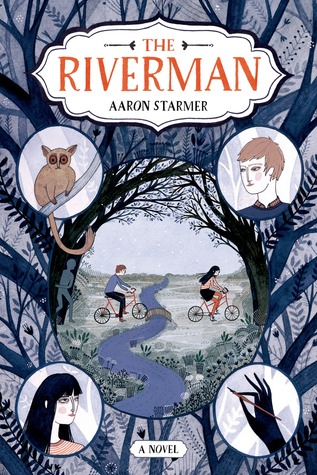
THE RIVERMAN
The Riverman
By Aaron Starmer
Published by Farrar Straus Giroux
Scheduled for release March 18, 2014
Review by Anthony Kendrick
Children's literature is filled with stories of children who find portals to strange new worlds where they can become more than what they are. But who are they really when they are in the real world? And what effect do their fantastical journey's have on those close to them?
Fiona Loomis is about to go missing, and she knows it. But she wants somebody to know why. She can’t tell her parents or the police because they wouldn’t believe her, and besides they would probably question her sanity and send her to an institution. No, it has to be someone like her; someone she has a history with, who is just as creative as her, and someone she can trust with a secret. That someone is Alistair Cleary.
Alistair has been selected by Fiona to write her biography; the biography of a self-proclaimed weirdo. She believes that in her basement there is a portal to another world where anything she wishes becomes reality, but there is another creature inhabiting this world that is stealing the souls of her friends; a creature they call “the Riverman.” Is she telling the truth, or is this a cry for help veiled in a fairy tale. Alistair will take it upon himself to find out and his life will never be the same.
“The Riverman” had me hooked from the very first paragraph:
“Every town has a lost child. Search the archives, ask the clergy. You’ll find stories of runaways slipping out of windows in the dark, never to be seen again. You’ll be told of custody battles gone ugly and parents taking extreme measures. Occasionally you’ll read about kids snatched from parking lots or on their walks home from school. Here today, gone tomorrow. The pain is passed out and shared until the only ones who remember are the only ones who ever gave a damn.”
Yes, this was going to be a story of lost children. It was to be a mystery. But it turned into so much more than that. “The Riverman” is equal parts fantasy and juvenile psychological thriller, with just a hint of unrequited love thrown in. Starmer does a great job keeping the reader off balance while we try to decide what type of story this really is; what is really going on with Fiona.
There were a few things I really love about this book. First Aaron Starmer seems to have a need to mess with our conceptions of time a little bit. While it is not abnormal for a decade in a fantasy world to be as seconds in the real world, it is abnormal to have a character keep track and adjust their persona accordingly. Second, I really like the complexity of the protagonist. Alistair is an average 12 year old who is neither popular nor unpopular; he is a good student and a seemingly good son, but he also keeps secrets, plays dangerous games, and has a dangerously overwhelming desire to protect Fiona no matter the lengths he must go to. However it is to be noted that, for me, Alistair was occasionally unbelievable as a 7th grader. Otherwise he was a compelling character.
As with any good book, “The Riverman” leaves you wanting more. Though I was definitely disappointed to not get the answers I wanted at the end of this book, the ending makes sense. You never get an answer to an unsolved missing person case and all that remains is memories to haunt you or comfort you, and this book is just like that. "The Riverman" is odd and intriguing, suspenseful and absorbing. Middle school readers, as well as juvenile and YA fiction readers of any age, will not be able to put this down.
Tuesday, December 3, 2013
THE LAST MUSKETEER
By Stuart Gibbs
Published by Harper
Copyright © 2011
Review by Anthony Kendrick
Meet the Three Musketeers before they were the Musketeers in this thrilling middle ages, middle school adventure.
Greg Rich comes from, well, a rich family. Over the years, however, they have squandered their wealth until it has come to the point that Greg’s parents have to sell the family estate. Fortunately for them there is someone who is more than willing to take everything off of their hands. Michael Dinicoeur, a representative of the L'ouvre in Paris, buys everything from the Rich estate and flies the family to France to deliver their many antiquities. But something just doesn’t seem right to Greg, and as they hand over the last item he soon learns that his gut is right. He and his family are thrust back in time and his parents are captured. If he is going to save them, and the world, he is going to have to find Athos, Porthos, Aramis, and D’Artagnan to help him.
“The Last Musketeer” is a fabulous romp back in time. It is full of action, adventure, and history. There is sword play (though I wish there was more), cannon fire, doppelgangers, secret missions, and narrow escapes. Gibbs also does well in describing what Paris of 1615 looks and smells like. He doesn’t glamorize it as some movies and books do. It’s really quite gross, which makes it perfect for boys age 10 and up. Really though, any youth (boy or girl) with an interest in historical fiction, especially the Musketeers, will like this book.
Published by Harper
Copyright © 2011
Review by Anthony Kendrick
Meet the Three Musketeers before they were the Musketeers in this thrilling middle ages, middle school adventure.
Greg Rich comes from, well, a rich family. Over the years, however, they have squandered their wealth until it has come to the point that Greg’s parents have to sell the family estate. Fortunately for them there is someone who is more than willing to take everything off of their hands. Michael Dinicoeur, a representative of the L'ouvre in Paris, buys everything from the Rich estate and flies the family to France to deliver their many antiquities. But something just doesn’t seem right to Greg, and as they hand over the last item he soon learns that his gut is right. He and his family are thrust back in time and his parents are captured. If he is going to save them, and the world, he is going to have to find Athos, Porthos, Aramis, and D’Artagnan to help him.
“The Last Musketeer” is a fabulous romp back in time. It is full of action, adventure, and history. There is sword play (though I wish there was more), cannon fire, doppelgangers, secret missions, and narrow escapes. Gibbs also does well in describing what Paris of 1615 looks and smells like. He doesn’t glamorize it as some movies and books do. It’s really quite gross, which makes it perfect for boys age 10 and up. Really though, any youth (boy or girl) with an interest in historical fiction, especially the Musketeers, will like this book.
Subscribe to:
Posts (Atom)