Tuesday, December 3, 2013

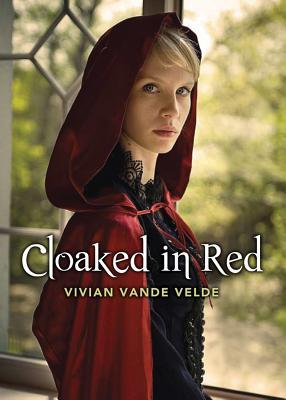
CLOAKED IN RED


By Vivian Vande Velde
Published by Marshall Cavendish
Copyright © 2010

Reviewed by Anthony Kendrick


Everyone is familiar with the story of Little Red Riding Hood. LRRH is traveling through the woods on her way to her Granny’s house to bring her a basket of food. When she gets there a wolf has dressed up like her Granny – “What big eyes, ears, and teeth you have”… “The better to eat you with!” “Ahhhh!” and then the woodsman comes around and saves LRRH (and sometimes Granny) from the wolf.

A child doesn’t really think much about this story, but as a young adult/adult you may begin to ask logical questions about this story (if you have a lot of time on your hands) like: why does she wear a red cloak? What is her real name? Why did her mother send her unattended through a dangerous wooded area? Why is she sending her to her sick grandmother so she can get sick too?

Vivian Vande Velde has obviously thought about this story a lot, and she provides us with 8 short stories in answer to her own questions. Some of these stories are exciting, some whimsical, some magical, and some humorous. And while I found some stories more enjoyable than others, they were all indeed very imaginative stories sure to keep your attention and make you wonder about other fairy tales.

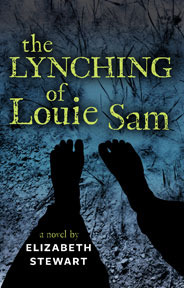
BOOK TRAILER - THE LYNCHING OF LOUIE SAM


THE LYNCHING OF LOUIE SAM


By Elizabeth Stewart
Published by Annick Press
Copyright © 2012

Review by Anthony Kendrick


We all like to think that we are good people, that given the choice of standing up for someone very different from us who is in desperate need or joining in with our peers who are injuring them, that we would do the right thing. But throughout history there were a litany of people who just stood by and let bad things happen. “The Lynching of Louie Sam” is likely the story of just such an event.

It’s 1884 in the Washington territory and the settlers in more remote parts of the territory stick close together for their safety and livelihood. While life is relatively peaceful, there is still tension with the Native peoples. George Gillies and his family live in what is now Whatcom County, Washington; just miles away from the international border with Canada. One Sunday on their way to church, George and his three siblings come across the burning house of their neighbor James Bell and they find that he has been murdered. All fingers point to a native boy, Louie Sam, who had been seen in the area that day. A lynch mob is formed to get Louie Sam; George and his friend Pete are eager to follow the mob into Canada to impress their fathers and their friends. Soon however, George and his father begin to have doubts about Louie Sam’s guilt. Will they keep quiet to protect their own, or will they do what is right?

“The Lynching of Louie Sam” is a historical novel that is based on an actual event. While the characters in the book were real people, any of their thoughts and actions, beyond the event in question, are merely great story telling. Elizabeth Stewart has written a gripping story about racism, injustice, and conscience. It even loosely touches on the issue of bullying. I think that Stewart explores the questions involved in these issues well: Is it more important to do what is right and see justice served, or to protect your own no matter what? And do you do what’s right to ease your conscience, or do you do what’s right because it’s right?

Stewart fleshes out a very complex cast of characters, especially in George Gillies. George is fifteen; he is trying to prove to his father and his friends that he is a man. This task is difficult because his best friend, Pete, constantly reminds him that he is a year older and treats him as such. In addition he has a very impetuous younger brother who seems to struggle less with his sense of right and wrong. Part of George’s problem is that he isn’t brash like many of the men and boys he knows, but he is thoughtful. In his one instance of definitive action and brashness the situation goes awry. So what does it mean to be a man?

There is just so much to enjoy about this book. The story is sad but riveting, the characters are complex, it touches home here in the Pacific Northwest, and the story’s moral is universal when considered alongside so many tragic events from history and modern times. I highly recommend this book for adults and youth in 7th grade and up.

POTATOES ON ROOFTOPS: FARMING IN THE CITY


By Hadley Dyer
Published by Annick Press
Copyright © 2012
Review by Anthony Kendrick


“More than a billion people survive on $1.25 per day or less,” thus hunger is still a big problem throughout the world. Even in the United States hunger is still a problem for millions of people. Many poor people throughout the world move to the city to make a better living, but what they find is that comparably they are still not making enough money and now they are farther from the good food sources of the countryside. Cities can be fun and exciting places to be, but they can be devoid of fresh, nutritious, and affordable food for many of us. That doesn’t have to be the case though.

“Potatoes on Rooftops” shows us how people of all ages around the world are using urban spaces to successfully grow great food from fruits and vegetables to chickens and fish. They are doing this on rooftops, window sills, empty city lots, and backyards. Urban farming not only helps feed people (often those in need), but also gives its participants a sense of pride and accomplishment.

This book is not a gardening/livestock instructional guide. It is a book of great ideas on how to make urban spaces greener and more useful. While the focus is mostly on the inner city, the ideas transfer well to small towns and the countryside where there are still many people who don’t own a lot of land, because among the important things it demonstrates is how to use limited space effectively. What I like most about this book, of course, is that it is directed at a younger reader. You are never too young to grow your own food as the text and illustrations in this book depict. You can make a difference in your family’s, and even your community’s, food supply and health.

I highly recommend “Potatoes on Rooftops” for middle school students and teachers. There is a lot to learn from reading and applying this book about environmental science, math, and even social studies.

PUNK ROCK ETIQUETTE: THE ULTIMATE HOW-TO GUIDE FOR DIY, PUNK, INDIE, AND UNDERGROUND BANDS


By Travis Nichols
Published by Roaring Book Press
Copyright © 2008

Review by Anthony Kendrick


Punk lives! Well sort of. There hasn’t been a chart topping punk band probably since the 90’s, but it certainly lives on the local level and on the indie/underground circuit. So do you want to be the next “the Clash” or “the Ramones”? Well then you aren’t punk. If you want to be the next YOU then you might just be ready for this book.

Nichols has written and illustrated a humorous and helpful guide to starting a band, marketing it, and going on tour. This book is not going to teach you how to write or play a cool song; that is something you just have to start doing and learn along the way. But he does help you learn how to play hard, play nice, be prepared, and make a little money. And I do mean a little money. But that doesn’t matter to you, you are punk rock and it is all about the music.

In addition, I really appreciate Nichols advice on staying safe and being healthy. While he does mention the possibility of small bands having to sleep in their car when touring (due to lack of money) he doesn’t recommend things like that. In fact he recommends planning ahead as much as possible so that you don’t run into unsavory situations. And as far as a musician’s health goes, he makes the point that you can’t rock hard for very long if you don’t take care of yourself. Musicians need sleep, they need to eat as well as they can, and drink a lot of water. He definitely discourages drinking and driving, doing drugs, and smoking if for no other reason than they can affect your ability to rock on.

Lastly one of my favorite pieces of advice from the book came from the “Things to do during your set list”: “Do what yo’ momma taught you – be nice to your audience. Nice bands that kind of suck can get pretty far in life.” I think that applies to everyone, no matter what you
do, be nice and you’ll go far.

This is a great book for any teen who aspires to have his/her own band, and it shows that even rocking out takes work, practice, and the desire to melt some faces… among other things.

THE LAST MUSKETEER


By Stuart Gibbs
Published by Harper
Copyright © 2011

Review by Anthony Kendrick

Meet the Three Musketeers before they were the Musketeers in this thrilling middle ages, middle school adventure.

Greg Rich comes from, well, a rich family. Over the years, however, they have squandered their wealth until it has come to the point that Greg’s parents have to sell the family estate. Fortunately for them there is someone who is more than willing to take everything off of their hands. Michael Dinicoeur, a representative of the L'ouvre in Paris, buys everything from the Rich estate and flies the family to France to deliver their many antiquities. But something just doesn’t seem right to Greg, and as they hand over the last item he soon learns that his gut is right. He and his family are thrust back in time and his parents are captured. If he is going to save them, and the world, he is going to have to find Athos, Porthos, Aramis, and D’Artagnan to help him.

“The Last Musketeer” is a fabulous romp back in time. It is full of action, adventure, and history. There is sword play (though I wish there was more), cannon fire, doppelgangers, secret missions, and narrow escapes. Gibbs also does well in describing what Paris of 1615 looks and smells like. He doesn’t glamorize it as some movies and books do. It’s really quite gross, which makes it perfect for boys age 10 and up. Really though, any youth (boy or girl) with an interest in historical fiction, especially the Musketeers, will like this book.